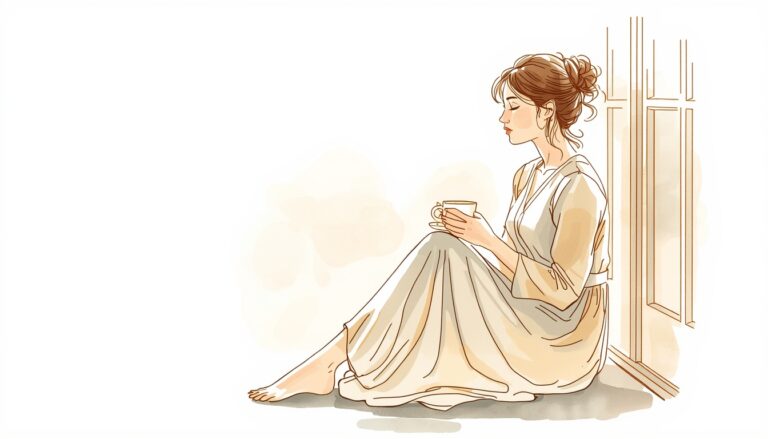

The Void: Navigating the Silent Space Between Two Selves
The Liminal Space of Transformation
The most challenging part of an identity shift is not the initial spark of inspiration, nor is it the final celebration of your success. It is the vast, often quiet, and deeply uncomfortable space in between—the “Void.”
In architecture, this is called liminal space; it is the hallway between two rooms. You have closed the door to your past, but you haven’t yet reached the handle of the next door. In this space, you are no longer who you were, but you are not yet who you are becoming. It is a period of “no longer and not yet,” and it is where the most profound psychological restructuring takes place.
The Identity Crisis in the Middle
When you begin a true identity shift, you dismantle the pillars that once held your self-image together. Perhaps you’ve left a long-term career, changed your social habits, or simply stopped saying “yes” to things that used to define you.
The result? A temporary loss of “Self.” You might look in the mirror and feel like a stranger. You might feel like an impostor in your new life and a ghost in your old one. This discomfort is often mistaken for a mistake. We think: “If I feel this lost, I must have made a wrong turn.” But in reality, the Void is a prerequisite for growth. You cannot pour new wine into an old bottle; the old structures must be cleared out to make room for the new.
Why We Fear the Void
Humans are biologically wired for certainty. Our brains love labels because labels provide safety. When we are in the Void, we lack a label. This lack of definition triggers a “survival” response, making us feel anxious, restless, or even depressed.
We often try to escape this feeling by:
- Reverting: Running back to old habits or people just to feel “normal” again.
- Rushing: Forcing ourselves into a new identity before we are ready, leading to a “pseudo-shift” that doesn’t last.
How to Honor and Navigate the Void
To successfully cross the Void, you must change your relationship with uncertainty. Here is how to navigate this transitional phase with intention:
- Stop Explaining Yourself: One of the heaviest burdens during a shift is the perceived need to explain your changes to others. In the Void, you don’t have the words yet—and that’s okay. Give yourself permission to be “under construction” without needing to provide a status report to the world.
- Look for “Micro-Evidences”: Since your big vision hasn’t fully manifested yet, look for small, daily proofs of your new identity. If you want to be a writer, the win isn’t the published book—it’s the 10 minutes you spent writing today. These small acts act as anchors, preventing you from drifting back to your old self.
- Audit Your Internal Dialogue: The Void is loud with old echoes. You will hear the voices of your past self telling you that you’re failing. Recognize these as “dying echoes.” They are not truths; they are just the old software trying to run one last time.
- Embrace Selective Solitude: High-level transformation requires a certain amount of withdrawal. Spend time in the quiet. When you remove the noise of external expectations, the voice of your emerging self becomes easier to hear.
The Birth of Authenticity
The Void is not a hole you fell into; it is the cocoon where the transformation happens. It is the silence between the notes that makes the music. Trust that the disintegration of your old life is simply the necessary clearing of the ground.
You are not lost; you are being redesigned. Stay in the hallway. The next door will appear exactly when you have become the person capable of opening it.